Technology
Innovation with Purpose
Much of the marine industry approaches electrification by taking conventional high-performance powerboats and replacing their combustion engines with oversized electric motors and ever-larger battery packs. We took a different path.
With more than two decades of experience in electric boating, our design philosophy begins with what truly matters on the water: range, efficiency and the quality of the time you spend onboard. Every decision follows from those priorities, rather than chasing horsepower figures that electric propulsion was never designed to imitate.
For us, the journey is the destination. And that changes everything.
A Different Approach to Electric Boating
Many of today’s electric boats are designed primarily for short bursts of speed. They may deliver high performance for around 30 minutes, followed by 10 to 12 hours of charging. It is a trade-off that does not reflect how most people actually spend time on the water, especially on lakes, rivers and calmer coastal waters.
Wia takes a different approach.
We design efficient electric yachts that can provide up to 24 hours of time on the water after a typical overnight charge, depending on the model, configuration and operating conditions. No special charging infrastructure, no fast charger and no need to plan the day around the battery. Simply plug in overnight and enjoy the water the next day.
Charging vs Boating
Hull Design
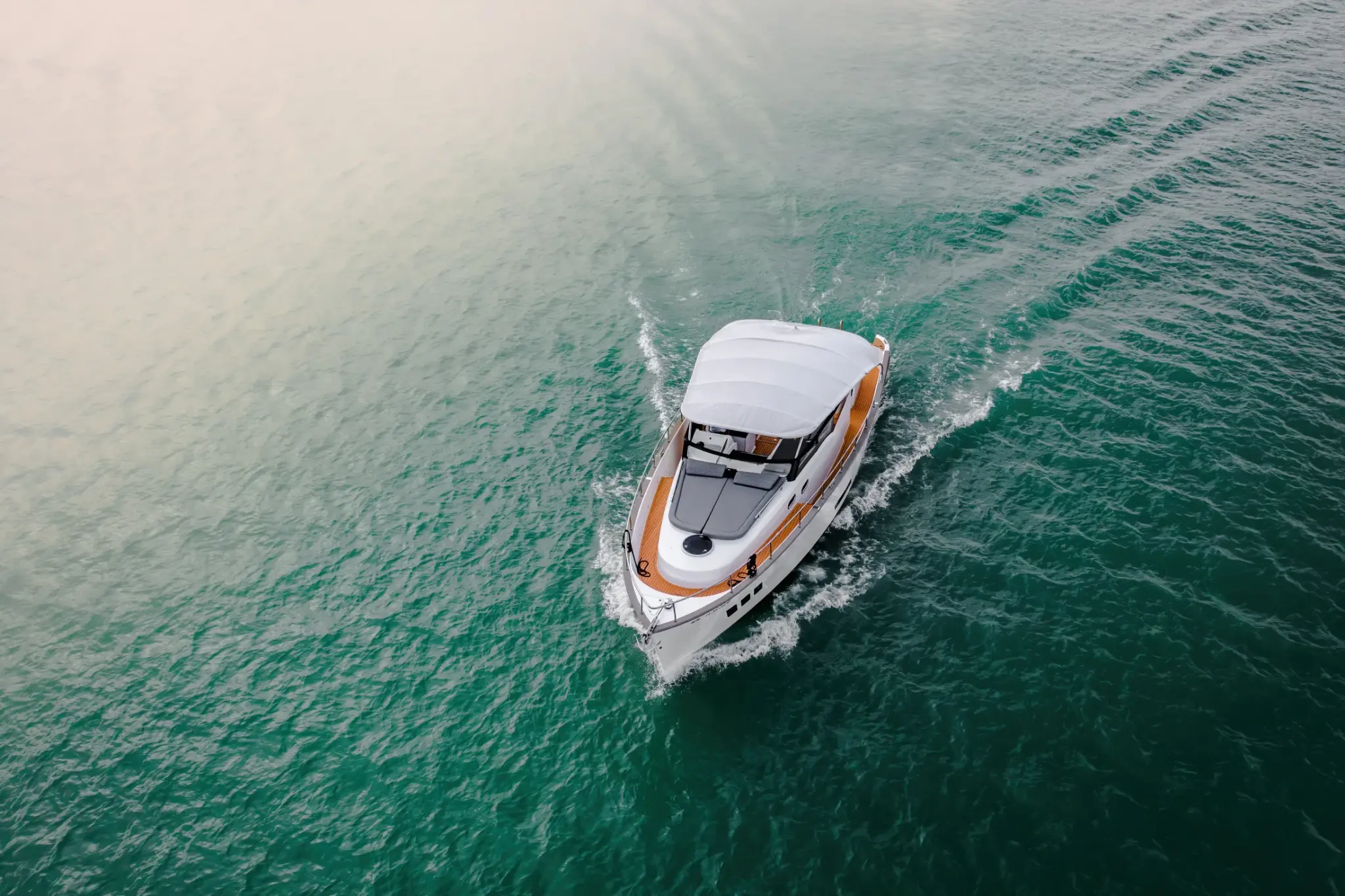
Every Wia hull is purpose-built for electric propulsion.
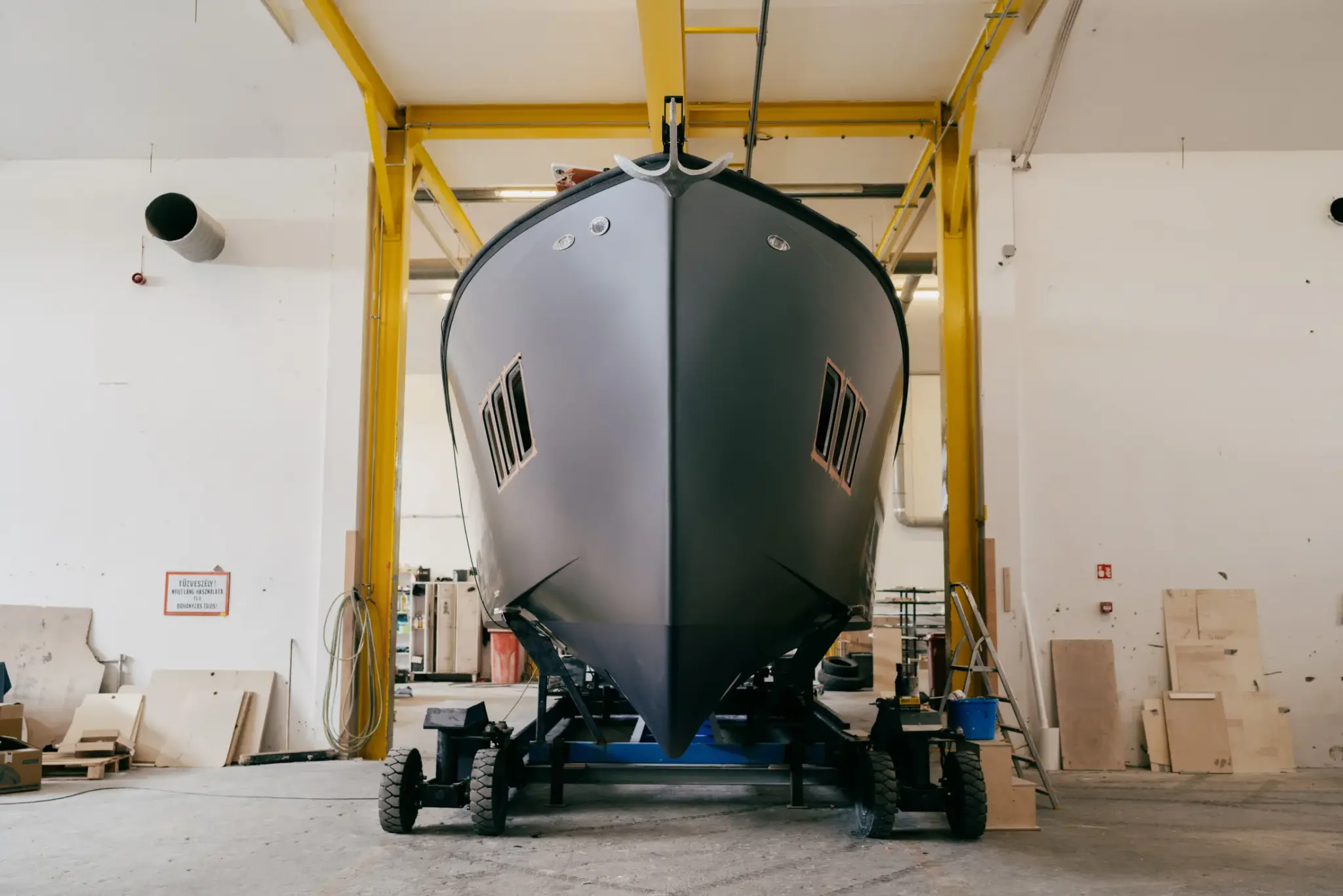
We do not retrofit conventional boats or compromise their design. Every Wia electric yacht is developed around electric propulsion from the very first sketch.
Semi-Displacement Hulls
Our semi-displacement hulls are optimised for efficient electric cruising, delivering:
- Minimal drag at cruising speeds
- Exceptional stability
- Significantly greater range than a planing hull of comparable size
- A smooth, confident ride, even with a full crew onboard
A semi-displacement hull sits between a traditional displacement hull and a full planing hull. It moves cleanly through the water rather than forcing itself across the surface, while generating enough lift to reduce resistance and improve efficiency at higher cruising speeds. The result is an electric yacht that travels faster than a pure displacement boat without the high energy demands of a planing hull.
Rather than competing with high-consumption speedboats, our performance philosophy is closer to that of long-range sailing yachts: boats designed to move gracefully, efficiently and with respect for the water.
Hand-Built Structure
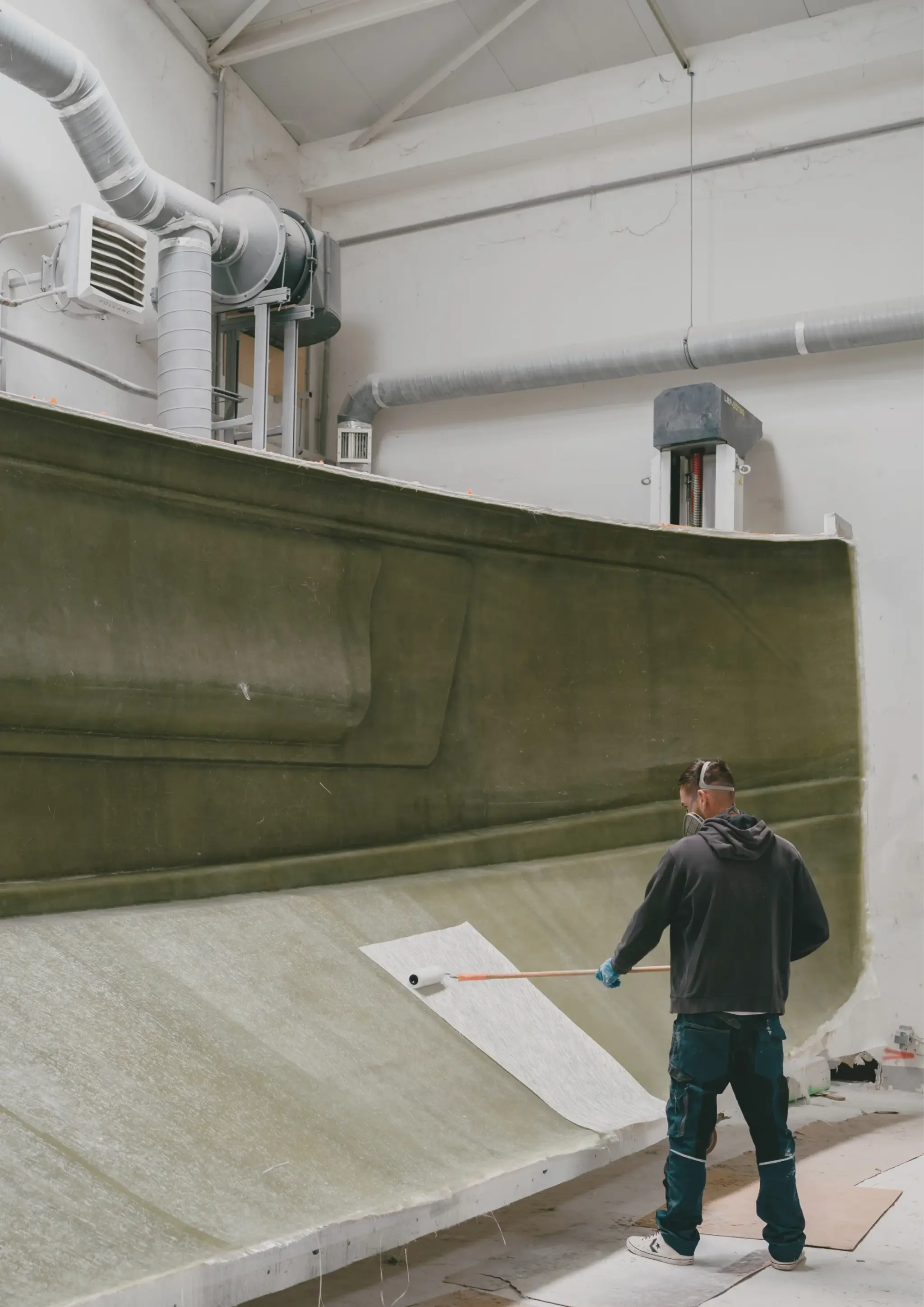
Every Wia hull is handcrafted using high-strength fibreglass sandwich construction. This traditional, non-automated boatbuilding process allows us to achieve:
- Superior structural rigidity
- Greater manufacturing precision
- Enhanced long-term durability
Beneath the gelcoat, every Wia hull includes a protective barrier-coat laminate designed to provide long-term resistance against osmosis throughout decades of use.

Electric Propulsion
Built Around Proven, Reliable Technology
Wia electric yachts are powered by LiFePO4 lithium iron phosphate batteries, one of the most stable, durable and widely trusted battery chemistries used in marine applications. Their chemical composition supports a high level of thermal stability, long service life and consistent performance. Compared with traditional lead-acid batteries, LiFePO4 cells offer a significantly lower risk of thermal runaway, retain their capacity through many more charging cycles and require very little maintenance.
We pair them with advanced electric propulsion systems from established marine technology suppliers with proven track records in the field.
Integrated Inboard Electric Systems
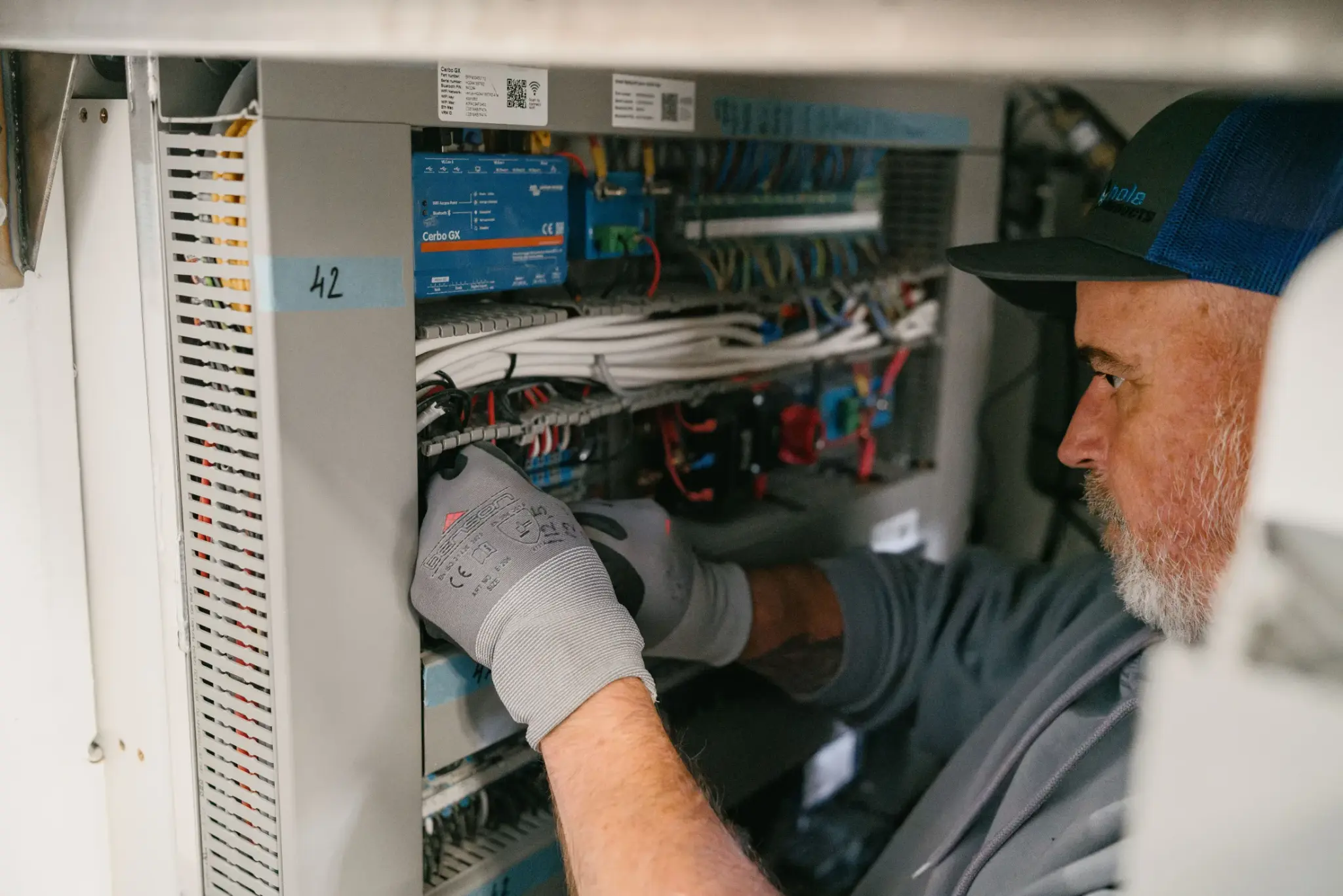
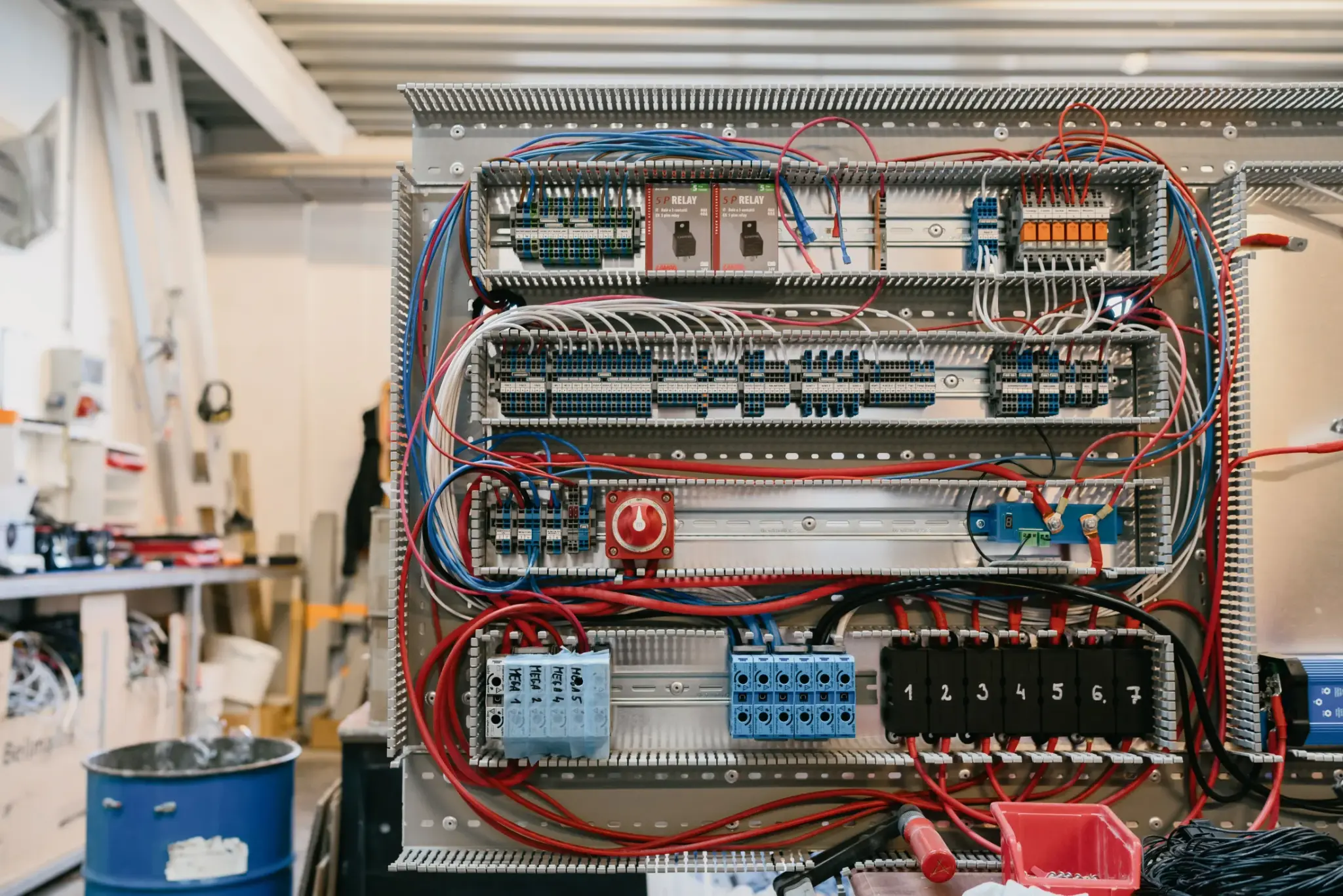
Every Wia model uses a fully integrated inboard electric propulsion system, installed entirely at our factory. No aftermarket electric outboards and no compromises in safety, balance or onboard space.
The result:
- Protected, fully enclosed propulsion systems
- Optimised weight distribution
- Straightforward maintenance
- A higher standard of onboard safety
Every component, from high-voltage cabling and cooling systems to battery management, is engineered and installed in accordance with marine electrical standards.
Electronics and Onboard Systems
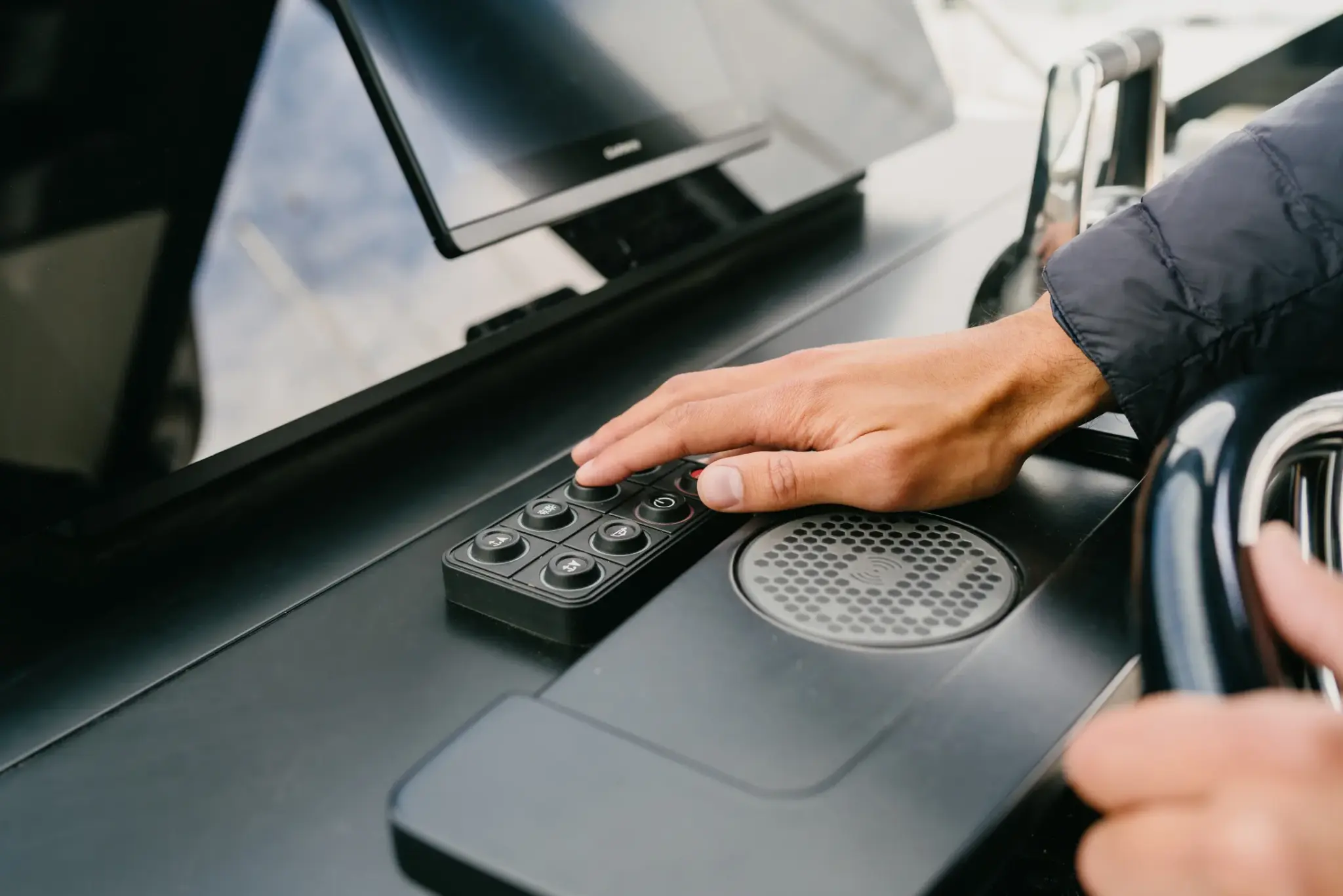
Wia electric yachts are equipped with modern marine electronics selected to make every experience on the water intuitive, connected and reliable.
From touchscreen navigation to fully integrated power management, every onboard system is chosen to simplify operation and improve comfort for experienced boaters and first-time yacht owners alike. Real-time information on battery status, energy consumption, charging and navigation is presented through clean, readable interfaces, allowing you to understand your available range at a glance, plan routes accordingly and operate the yacht with confidence.
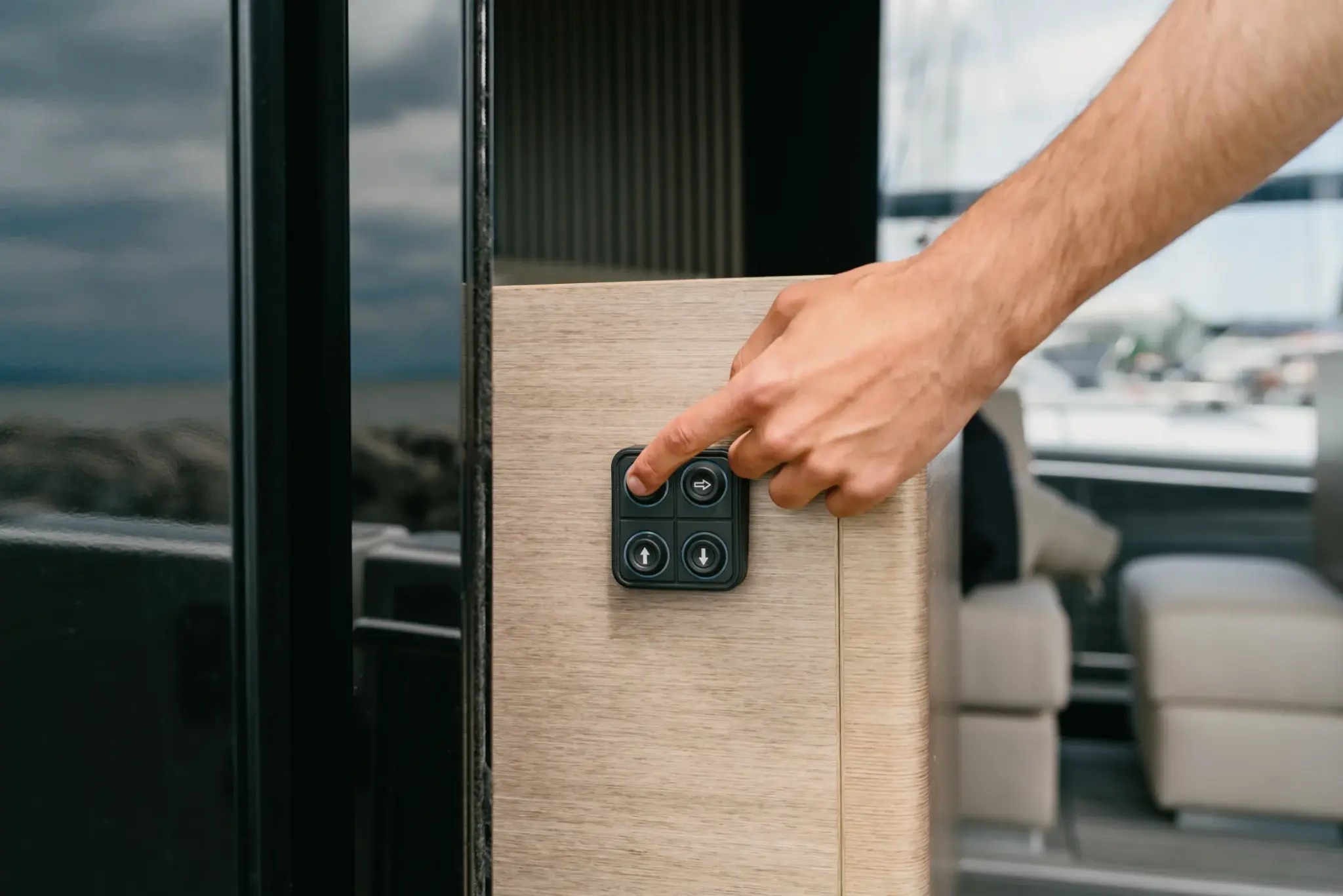
Wia models can be configured with advanced marine navigation systems, intelligent controls, remote monitoring and manoeuvring solutions including joystick control and integrated bow and stern thrusters. Together, these technologies make docking and low-speed handling significantly easier, even in tight marinas or more demanding conditions.
Remote access keeps you connected to your yacht from almost anywhere, providing visibility over charging status and key onboard systems while the boat is not in use.
Our goal is simple: to make electric yachting feel effortless. Every onboard system is designed to help you understand the yacht more intuitively, access essential information quickly and enjoy a smoother, safer and more comfortable experience on the water.
Continuous Development
For more than twenty years, our team has helped shape the future of electric boating through continuous innovation, real-world experience and long-term technical development.
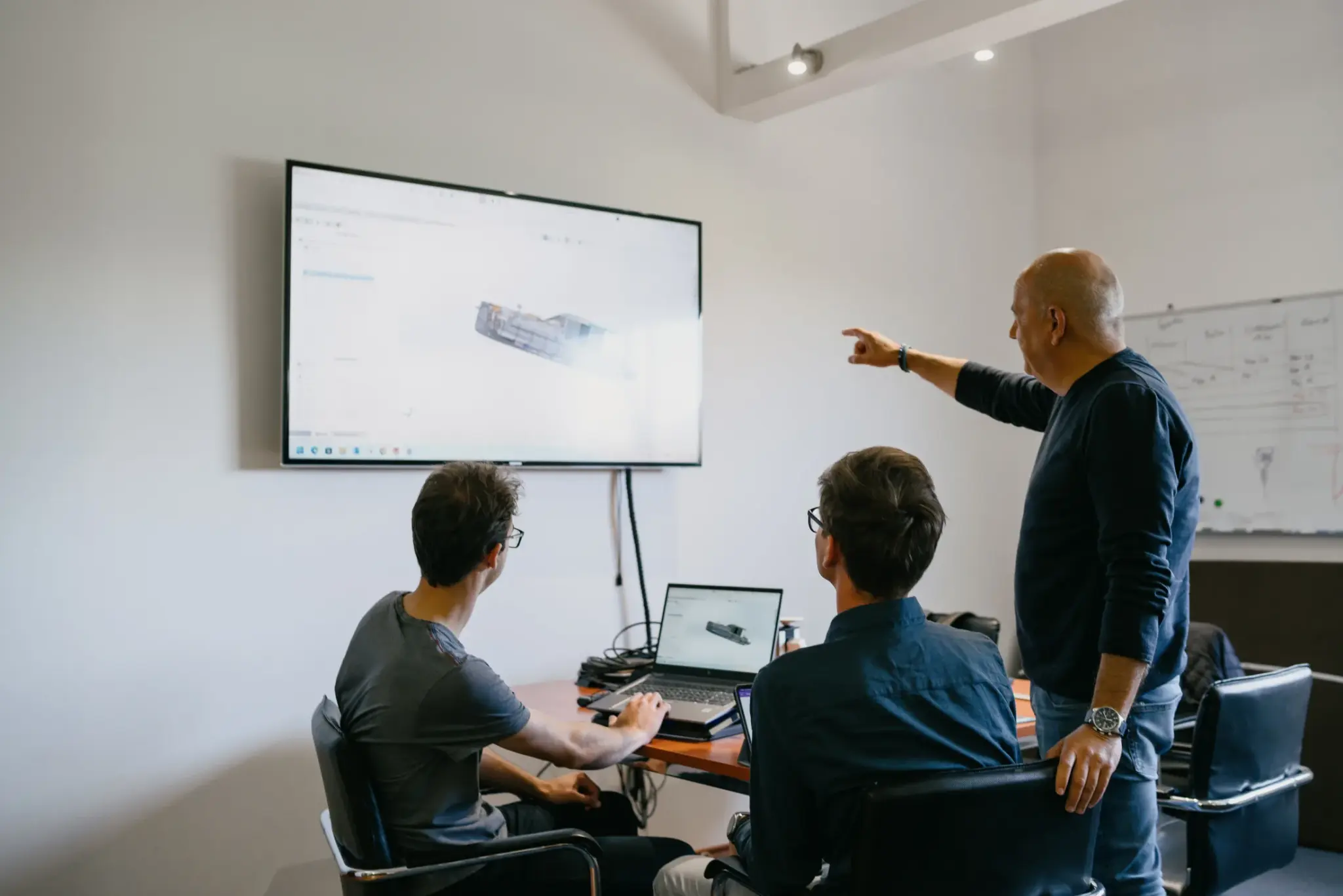
At Wia, development is never a one-time process. Every new electric yacht model is the result of years of testing, refinement and continuous learning across both boatbuilding and electric propulsion. From electric drivetrains and battery systems to onboard comfort, control and usability, we continue working to improve every aspect of the experience on the water.
Over the years, we have worked with hundreds of suppliers, manufacturers and technical specialists across Europe and beyond. This network allows us to evaluate and integrate genuinely better marine technologies as they emerge, including electric motors, battery systems, charging solutions, onboard electronics, deck coverings, marine materials and structural components.
We remain closely connected to the wider marine industry, attending international boat shows, engineering exhibitions and technology events across the boating and electric mobility sectors. In our experience, meaningful innovation comes from testing new ideas in real-world conditions and adopting only those that measurably improve reliability, efficiency and life onboard. With more than 300 boats delivered, much of what we know has come from observing how our yachts perform in the hands of owners, season after season.
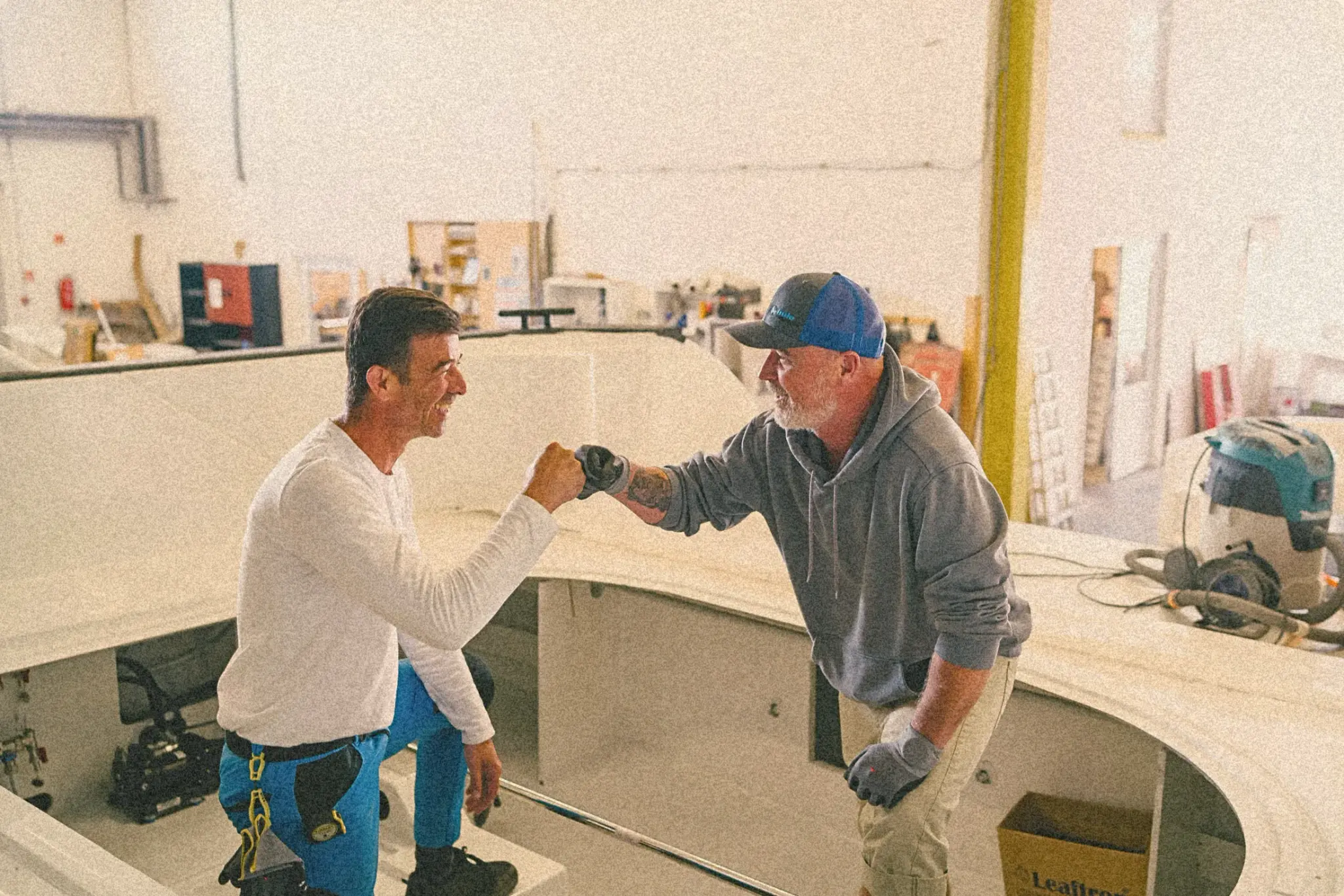
We believe the best ideas emerge when craftsmanship, technology, and ambition move together.